






Plan Ahead with Long-Term Care Insurance

A long-term care (LTC) policy is key to financial planning. Because guessing your way through retirement isn’t a plan.

Couple smiling with an arrow pointing at an image of a trusted long-term care pro.

Our RamseyTrusted® insurance pros are here to walk you through LTC policy rates and to find out when the right time is to get one.

No spam. You'll only hear from one insurance pro.

Let’s Get Real About Long-Term Care

Normal is being unprepared for a financial emergency. No plan and no safety net to cover care when you get older. Without long-term care insurance, the reality of aging can wipe out your savings and turn your family into your caregivers. Long-term care insurance helps cover the cost of care when you can’t manage daily tasks on your own due to aging or illness—making it one of the most loving decisions you can make for your family and your future. Here are some important numbers to consider:

  • 70%

    The number of Americans turning 65 today who will need long-term care.1

  • $2,550

    The average annual cost a 60-year-old couple pays for a $165,000 policy benefit.2

  • $9,277

    The median out-of-pocket cost for just one month in a nursing home in America.3

A device showing a browser with text: "When Do I Need Long-Term Care Insurance?"

When Is the Right Time for Me?

Getting a long-term care (LTC) policy within the right window can make all the difference. This quick tool shows if it’s too early, just the right time to get covered, or better to look at other options.

Get Long-Term Care Insurance the Smart Way

Learn how to prepare for long-term care the way Ramsey teaches. For years, families have followed the 7 Baby Steps to protect their future—and we’ll help you do the same with long-term care.

Steve, a RamseyTrusted pro, photographed in a shield

Long-Term Care Insurance Explained

Long-term care insurance helps cover services like assisted living, nursing home care, or in-home support—costs that Medicare and regular health insurance usually don’t pay for. It’s a way to protect your savings and give yourself more choice and control if you need help with daily activities later in life. The best time to consider a policy is while you’re still healthy, since coverage is easier to qualify for and typically more affordable. Planning ahead can make a big difference for both your finances and your family.

How Much Does Long-Term Care Insurance Cost?

The cost of long-term care insurance depends on factors like your age, health, coverage amount and the type of policy you choose. Premiums are usually more affordable when you buy younger and in good health, but they can increase over time depending on your plan. While it’s an added expense, it can help protect your retirement savings from the high cost of extended care. Understanding what impacts the price can help you choose coverage that fits your needs and budget.

More Helpful Long-Term Care Articles

is long term care insurance worth it
Insurance

Is Long-Term Care Insurance Worth It?

Learn why long-term care insurance is worth considering, how much coverage costs, and the pros and cons of buying a policy. Understand your likelihood of needing long-term care, what expenses it covers, and when to purchase it to get the best approval odds and rates.

Ramsey Solutions Ramsey Solutions
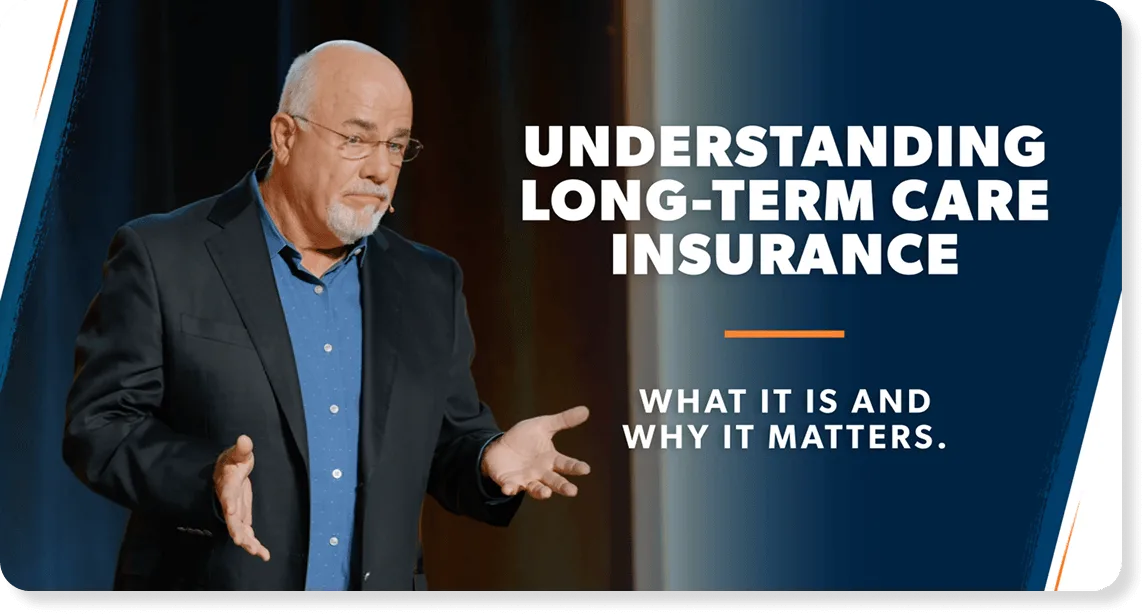
Image of a the video thumbnail with Dave talking

Get the Basics on Long-Term Care Insurance

Receive instant access to an exclusive video that breaks down long-term care insurance—just the facts, no fluff.

Frequently Asked Questions About
Long-Term Care Insurance

You’ll pick a term (a time of 1–10 years) and benefit (the amount your insurer will pay). When you need in-home, assisted living or nursing home care, your insurer will pay your monthly benefit to help cover those costs for the length of your term.

Long-term care insurance covers a lot of in-home care costs—including medical care and equipment, task assistance, and home modifications. So if it’s your goal to stay at home, long-term care insurance is a must. It also covers services outside your home like nursing homes, assisted living facilities and adult day care.

(Spoiler alert: Medicare won’t cover many of those costs.)

Long-term care insurance helps cover ongoing care—like in-home care, nursing homes or assisted living—when you can’t handle everyday tasks due to aging or disability. Ramsey recommends it for folks nearing retirement age.

Long-term disability insurance replaces a portion of your income if you can’t work due to injury or a long-term illness. It helps you to keep paying your bills until you recover or reach retirement. You can apply for this type of policy no matter your age.

Yes . . . and no. Medicare covers some costs, but you have to pay the rest. If you can’t, the government can come after your spouse and kids to collect that debt after you pass away. And to add insult to injury, Medicare has lots of limits—so you won’t be able to choose the type or quality of care you deserve.

In some situations, yes. Long-term care insurers may deny you if you have certain health issues. A RamseyTrusted pro can help you find out if you qualify for traditional long-term care insurance. And if you do have a disqualifying health issue, they’ll help you understand your other options—so you can get the care you deserve.

Some employers do offer a long-term care policy to their employees. But it’s important to note that some of these long-term care policies go with you when you leave, and some don’t—it depends on the plan. Even if they do, the coverage is usually pretty limited. You can get more coverage with a private policy, but you’ll pay more for it.

No. Unfortunately, health insurance policies don’t cover long-term care costs.

Yes. And if they won’t do it themselves, you probably should.

1

Step 1: Save $1,000 for your starter emergency fund.

2

Step 2: Pay off all debt (except the house) using the debt snowball.

3

Step 3: Save 3–6 months of expenses in a fully funded emergency fund.

4

Step 4: Invest 15% of your household income in retirement.

5

Step 5: Save for your children’s college fund.

6

Step 6: Pay off your home early.

7

Step 7: Build wealth and give.

Learn How Long-Term Care Fits Into Your Money Plan

Long-term care insurance is a smart move—but only once the basics are covered. That means you’re debt-free and have your emergency fund. You’ve built wealth and now it’s time to protect it. If you’re still climbing out of debt, this isn’t your next step. Focus on building your financial foundation first.

Know What Long-Term Care Insurance Covers

Long-term care insurance helps pay for things health insurance and Medicare don’t—like help with everyday tasks such as bathing, dressing or eating, or care in an assisted living facility or nursing home. It can also help cover adult day care, home modifications and medical equipment.

Work With a Trusted Pro Who Shops for You

We recommend working with a RamseyTrusted® insurance pro. These vetted brokers know the industry inside and out. Long-term care policies come with a lot to consider, but a trusted pro can explain your options in plain English. They’ll also shop multiple companies to find the right fit. Don’t sort through confusing terms on your own. Get clear guidance so you can make confident decisions about your coverage.